AI and Academic Literature, week 2
Article anatomy, review design and mapping a field
41 scenes
EPOL 590 - AI and Academic Literature
590 Lecture 2: Anatomy of a Journal Article / Where's the Gap? Mapping a Field
Topics (and rough timing):
- What is a Journal Article? What is a Literature Review? (hour 1)
- Mapping a Field (and Minding the Gap) (hour 2)
- Does a Literature Review Need a Methodology? (hour 3)
Tonight
| Time | |
|---|---|
| 5:00 | Welcome back, Week 1 recap and Task 1 |
| 5:10 | Overdue: breakout rooms |
| 5:40 | Anatomy of a journal article; what is a literature review? |
| 6:00 | Break |
| 6:10 | Mapping fields and minding gaps; tone; what do we do when we open an article? |
| 7:00 | Break |
| 7:10 | Does a literature review need its own methodology? |
| 7:35 | This week's activity, Task 2 and next week's readings |
Recap on Week 1
- What is this course about? Do we need another course on academic literature?
- Foundational: How to Develop a Literature Review
- Future-Oriented: How AI is Impacting Academic Literature / Scholarship
- Mix of Theory and Practice
How do you build a sense of your field and its gaps? This course aims to make sense of a term – academic literature – at once mundane and mystical. It starts with fundamentals: how to build, annotate, analyze, map and translate a literature database into a literature review. It progresses to think about how AI and other technology can help foster more critical, analytic and reflexive modes of interpretation and understandings of the field.
How was the Week 1 class constellation made?
(Claude says:) It was built with Claude over several conversations, so there is no single original prompt. This prompt is a starting point for a similar page:
Build a single-file interactive HTML page for a graduate seminar, EPOL 590: AI and Academic Literature. Each student adds their name, up to five research interests and a one-sentence research topic. Show the class as a slowly rotating 3D network: the course at the centre, each interest as a coloured hub, and students linked to the hubs they share. For each interest, fetch a few recent papers from the OpenAlex API and attach them to its hub as small nodes in the same colour. Clicking a paper shows its title, authors, year, abstract and a link to the full article; clicking a student shows their topic and who shares their interests. Use only HTML, CSS and JavaScript in one file.
- A single HTML file can't share entries between students on its own: that needs shared storage, such as a Claude artifact's database or a small server
- Then iterate: ask for one change at a time, and check every paper it shows against the source
Overdue: Breakout rooms...
Discuss (~30 minutes?):
- What is your research question / topic? Why does it matter?
- What do you already know about it? What is your initial answer? What could possibly change once you've done your research? Is there capacity for you and your audiences to be surprised?
- What does AI say? What happens when you ask something like "Here's my research question? Has it already been answered? How can I modify the question to better address gaps in the literature?"?
Then discuss collectively:
- Was it easy to phrase your question? Did your peers understand the question?
- How might AI be changing how you (or others) go about answering this question?
Breakout rooms: Report back
Anatomy of a Journal Article
- Think back to Weber: the "Journal Article" is the vehicle of choice for transmitting science (German: Wissenschaft, or what we would call knowledge)
- We read dozens, hundreds, thousands...
- Our life is conditioned by the results of journal articles
- For example, "AI" is today largely dominated by the effects of a single paper, "Attention is All You Need" (GS cites: > 275K)
- Anthropic filed for IPO today: >$1.5tn
- But what is a journal article? How do you analyze one? How do you write one?

Quick history
- The "journal" is a recent(-ish) invention
- Convenient communication of science (European enlightenment: 17-19th centuries; "disinterested" scholarship, "peer" review)
- Carey, last week: peer review as "parlor game"
- (Burke, Kenneth. The Philosophy of Literary Form: Studies in Symbolic Action. Louisiana State UP, 1941.)
- But also literally: French 17th-18th century salons, "age of conversation", rise of the "public sphere"
- (Habermas, J. (1991). The structural transformation of the public sphere: An inquiry into a category of bourgeois society (T. Burger & F. Lawrence, Trans.). MIT Press. (Original work published 1962))
- Universities as today's "polite society"? What are the norms and standards of debate?

An "ontology" (or supply chain) of publishing
- A collection of articles
- Authors of the article
- An editor (who reviews and assembles articles)
- Peer reviewers (other scholars who the editor invites to review articles)
- A publisher (who recruits the editor, typesets, sells and distributes the journal to readers)
- A readership (who subscribes to the journal - very often university libraries)
What is the purpose of an article?
- An article makes an argument
- As such, it is a form of persuasive writing
- It aims to change the mind of a reader
- But to do so, it must use evidence (and other things)
- All the parts of an article should contribute to this aim: persuasion
- This is true of the literature review too...

Typical Structure of an Article (and Most Dissertations)
- Introduction
- Literature Review
- Methodology
- Findings
- Results
- Conclusion
- But why? Why these parts and not others?

Aside: Perversity of Publishing
- University libraries pay subscriptions to the publisher for articles that its own employees have authored (and edited and reviewed)
- Why?
- Are there alternatives?
- Open access publishing (but questions of sustainability of volunteer labour / reputation / distribution reach)
- Rise of "predatory publishing" (& dreaded "Article Processing Charge" - up to $8K USD)

Aside 2: Who's Afraid of Academic Publishing?
- Lots of LDL course assignments, dissertations ought / need to be published!
- Consider all the options:
- Substack
- Local media
- Preprint servers (arxiv.org, edarxiv.org)
- UIUC repositories (IDEALS), presses
- CGScholar / CyberScholar
- Graduate conferences
- AERA conferences
- Peer-reviewed journals (gold standard)
- Any / all of the above
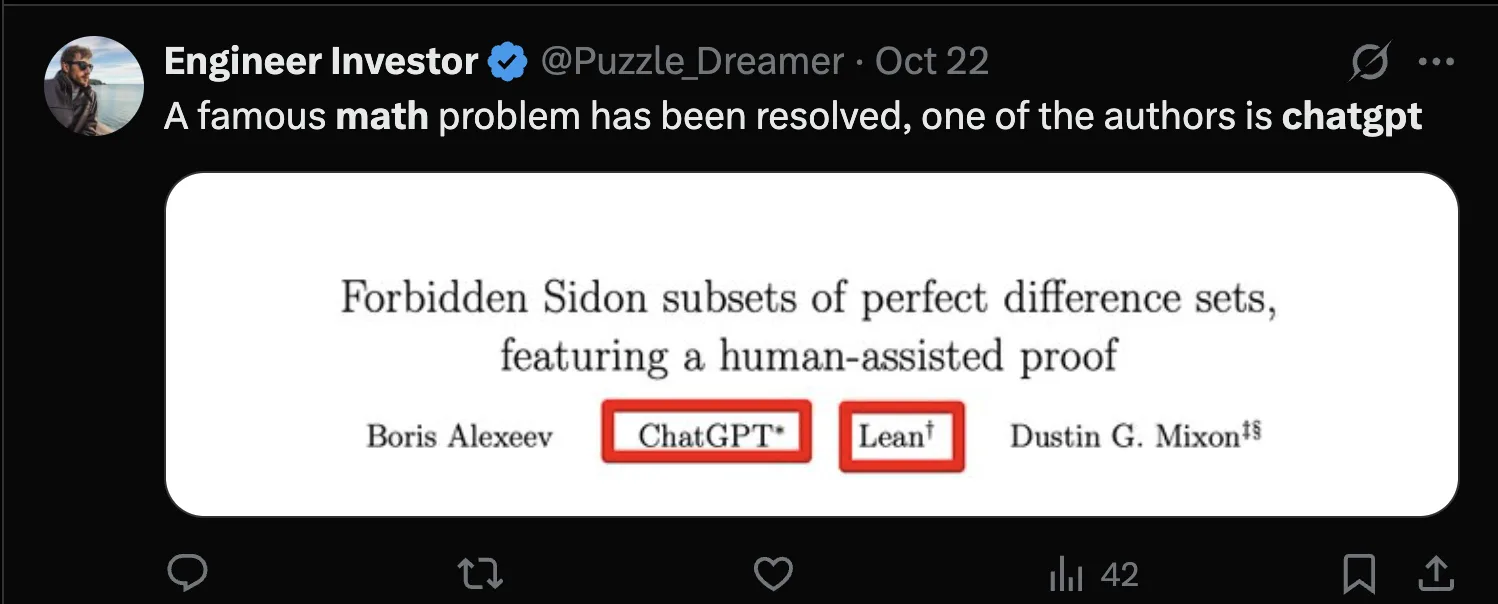
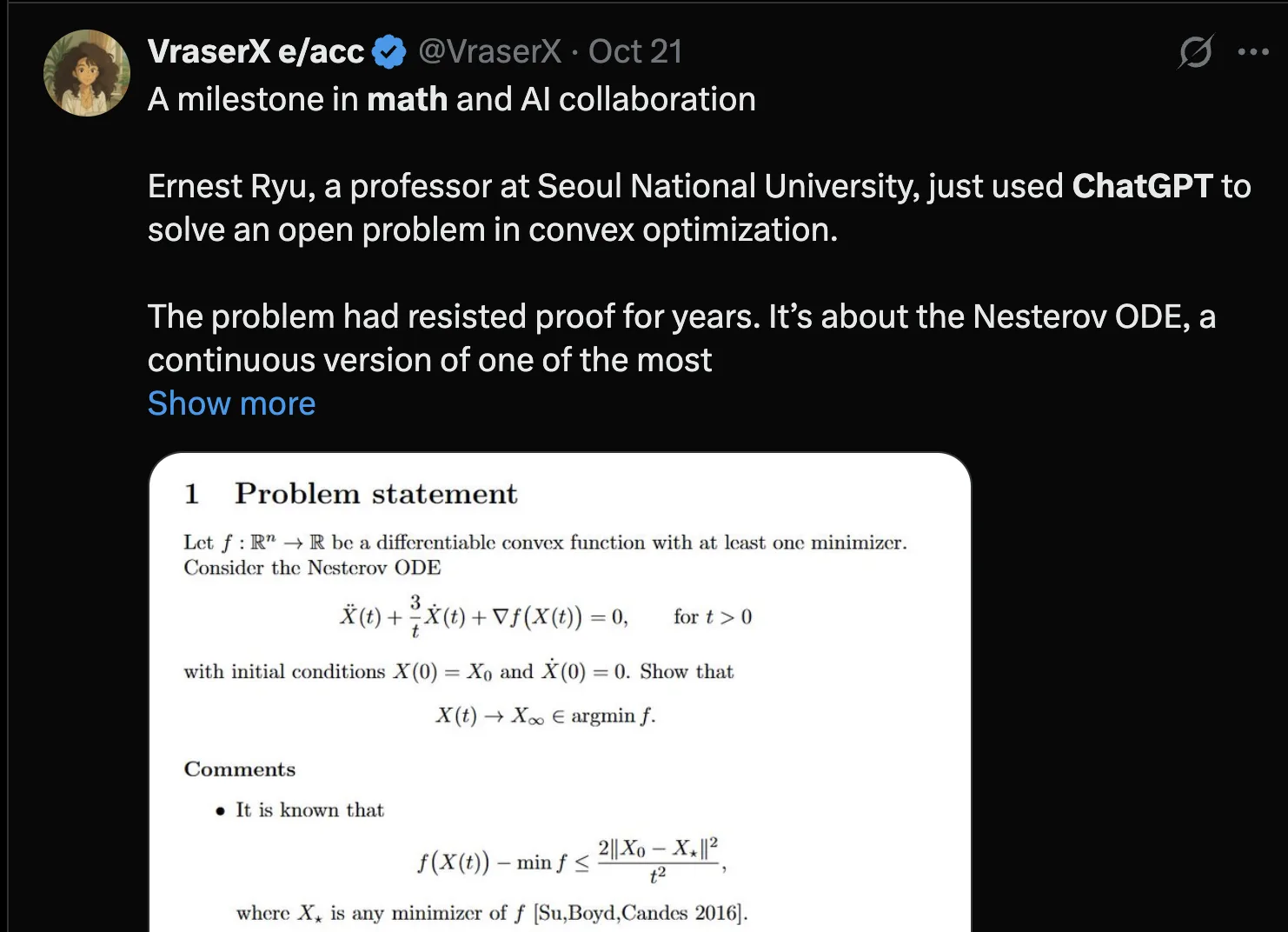
Aside 3: AI Authorship of Journals
- Would you read an article by a bot? Under what circumstances?
- What about a math paper?
Two (Pseudo-)Random Articles
- Keerthiraj, & Misra, A. (2025). Who owns the future? AI, digital sovereignty, and the politics of knowledge. AI & SOCIETY, 1-13. https://link.springer.com/article/10.1007/s00146-025-02641-y
- Liu, J., Zhang, Y., Li, W., Wang, Q., Niu, P., & Zhang, X. (2025). Adaptive vs. Planned Metacognitive Scaffolding for Computational Thinking: Evidence from Generative AI-Supported Programming in Elementary Education. Computers & Education, 105473. https://doi.org/10.1016/j.compedu.2025.105473
- Why these two examples? Contrasting methods, yes - but more than this, these articles reflect different orientations towards scholarly techniques of persuasion
First: What do we do when we open an article?
- What are the different ways of reading?
- 2 Common Strategies:
- Top to bottom
- Abstract, Introduction, Conclusion - then the rest
- Sometimes:
- Literature Review first
- Methodology first (what did the researchers do?)
- References first (what "space" of academia does this belong in?)
Other ideas?
EPOL 590 Fall 2026 class document

Who owns the future? AI, digital sovereignty, and the politics of knowledge Keerthiraj, & Misra, A. (2025)
Keerthiraj, & Misra, A. (2025). Who owns the future? AI, digital sovereignty, and the politics of knowledge. AI & SOCIETY, 1-13. https://link.springer.com/article/10.1007/s00146-025-02641-y
Adaptive vs. Planned Metacognitive Scaffolding for Computational Thinking
Liu, J., Zhang, Y., Li, W., Wang, Q., Niu, P., & Zhang, X. (2025). Adaptive vs. Planned Metacognitive Scaffolding for Computational Thinking: Evidence from Generative AI-Supported Programming in Elementary Education. Computers & Education, 105473. https://doi.org/10.1016/j.compedu.2025.105473
Mapping Fields and Minding Gaps

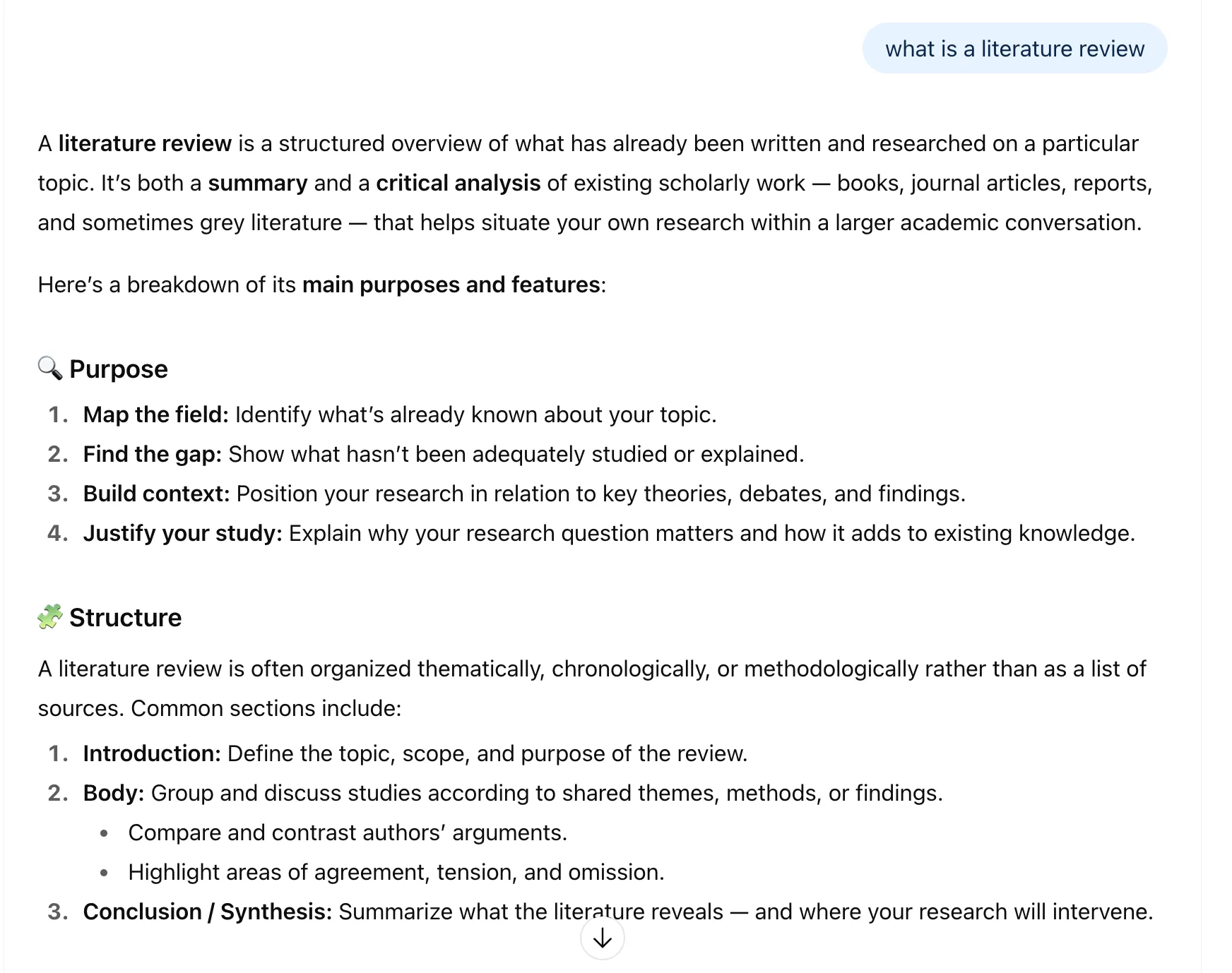
What is a literature review?
Lots of answers, lots of guidance...
Literature Reviews | Writers Workshop | Illinois
Writing a Literature Review - Purdue OWL® - Purdue University
Literature Reviews – The Writing Center • University of North Carolina at Chapel Hill
What is a literature review? The phenomenological view...
- Your Introduction introduces your research question.
- I'm sold - it intrigues me (the reader). But I know you're not the first person to argue something like this...
- In fact I saw another article like this just last week...
- But you're the expert. So tell me who has studied this before. Organize what you're telling me:
- It could be a history of your field...
- Or a collection of related themes / topics...
- Or a geographical survey...
- Or it could be a path from the abstract ("According to Piaget, childhood development...") that proceeds to the concrete ("Studies in Illinois over the past decade show a deficit in pre-K")...
- Great, now I know what others have said. But tell me: what are you going to add to that conversation?
- Persuade me; tell me this has never been said before. Think of the parlor situation: is this something really new? or just gossip I've heard before?
Shark Tank?
- If it helps: the literature review analyzes the "market" of ideas, and identifies a gap in that market

Does a Literature Review need its own Methodology?
- We have a Research Question / Topic
- What's next? Just blast out a search on Google Scholar / University Website? Build a list of references, annotate, summarize, organize? Find the gap?
- But can come across as arbitrary
- Or: think of the Literature Review as a mini-research project within the project ( / article / dissertation)
- Or an argument ("this is the gap...") within a greater argument ("... and this is how I filled it")
- So it becomes beneficial to think of a methodology - a recipe or set of steps for how you compile the review
Learn from Marx?
- Order of analysis is different from order of presentation
- In analysis we go from concrete (stuff we see) to abstract (concepts of thought)
- In presentation, we go from abstract (concepts) to concrete (the world of experience) - explaining the world of experience

What's the "research question" of the Literature Review?
- What's the gap in the literature? (should eventually coincide with the research question)
- What are you arguing? That this gap exists... (perhaps other things too)
- Develop a Methodology:
- Choose relevant search terms (think about AI's ability to translate the terms you think of to the ones you don't)
- Pick a couple of relevant articles and read the references
- Choose an organizing principle:
- Organize by theme? What are the themes?
- Organize by time? How have debates on topic X evolved?
- Choose relevant search terms (think about AI's ability to translate the terms you think of to the ones you don't)
- Construct an Introduction and Conclusion
Metaphors of Knowledge: Navigating fields and finding gaps
- What is the field? Talk your reader through it...
- What is the gap? Tell your reader how you get there...
- work backwards - find the gap, then organize the steps...
- Use the language of argument / metadiscourse:
- If we are on a "path" through the "field", join the dots:
- Move up / down: general - specific
- "More generally...", "At an abstract level", "Theoretically...", "Globally / Nationally..."
- "More specifically...", "At a concrete level", "Practically", "Locally..."
- Move side to side: similar - different
- "Similarly...", "Along the same lines...",
- "However...", "Conversely...", "On the other hand...", "In contrast..."
- Move up / down: general - specific
- "Control" your navigation:
- "This review will cover...", "The literature describes several facets of..."
- Add some drama: "Meanwhile...", "Despite...", "X has disputed Y's findings..."
- "This review has covered..."
- If we are on a "path" through the "field", join the dots:

Work it like a Puzzle
- Look at the whole picture - does it make sense?
- Fill it in piece by piece
- Iterate - whole to part, then part to whole, then whole to part
- More vocabulary: the Hermeneutic Circle
- Understand the Whole (in order to Interpret the Part)
- Interpret the Part (in order to Understand the Whole)


Common Pitfalls
- The Annotated Bibliography and the Literature Review - what's the difference?
- You cannot convey all of the literature (a population); you get to sample selectively
- Don't persuade the reader you've read everything (you can't); persuade the reader of the gap
- Tone: Navigating the "Two Cultures" (see Snow 1959)
- Lack of Signposting / metadiscourse / discourse markers / rhetorical statements
- Lack of persuasive purpose (the "meandering review")
- "Laundry list" of gaps -> Narrow down on the one / two that you are likely to follow
More on tone...
- Tone: Navigating The Two Cultures (see Snow 1959)
- Scientist / Quantitative / Positivist
- Lots of 3rd person / passive voice ("It was observed that...") - But note, this is changing
- Humanist / Qualitative / Post-positivist or Interpretivist or Constructivist
- More 1st person / active voice ("We noticed that")
- In the field of education, both "cultures" co-exist (sometimes even peacefully)
- How do you decide on your tone?

Does a Literature Review Need a Methodology?

Checklist:
- What are the key terms of the (draft) research question? List them...
- What are the norms of your field? And what is your field?
- What is a reasonable method or recipe for your literature review?
- What are related terms (can AI find reasonable synonyms)?
- What do you get when you search Google Scholar / library databases for these terms?
- Do you have existing articles / authors to draw from?
- What citation system are you using? Can you code / organize literature in the way you'd like?
- What is the best organization of the literature? Thematic, field (for multi-/interdisciplinary work), chronological, spatial, general / special?
- Are there classics you are expected to cite? References with very large number of citations (e.g. Braun & Clarke 2006; Vaswani et al. 2017; Bender et al. 2021)?
Growing your database
Different techniques for expanding your database:
- Search (Google Scholar / library databases)
- With existing articles:
- Go back: Scan references of this article
- Go forward: Search for citations of this article
- Go sideways: What else was published in the same journal / issue
- Check common "authorities": Wikipedia, syllabi, AI
- e.g. "Critical AI" - people will be citing Bender et al. (2021) stochastic parrots paper
- Investigate: Who are the classics that shaped a field? Who are the contemporaries that are re-shaping the field?
- Water cooler conversation: what names keep appearing in lecture notes, conference papers, other student essays, discussions?
- Tools:
- Other tips & tricks?

Population to Sample to Sub-sample
- Your database is a sample of a population
- Your review will (usually) be a sample of that sample
- What determines what to include? what to exclude? How do you determine relevance?
- No hard answers but consider:
- Classics in the field
- Important recent contributions (last 2 years)
- Exemplars of perspectives (Chomsky vs Pinker) - not the middle ground, not the commentaries
- What fits your narrative - but be cautious about cherry picking. Lean into - rather than avoid - the inconvenient literature!
- Be explicit about what is excluded and why
Do some sketches: pilot the review
- Experiment with different organizing principles: Time, followed by theme, followed by space
- Just be approximate
"Criticism of AI dates back to the inception of the field itself. For example, Dreyfus (1965) discussed the brittleness of (etc)... By the early 1980s, scepticism voiced by philosophers such as Searle (1980) in his famous "Chinese room" experiment, contributed to the emergence of an AI winter. More recently, as generative AI has largely revived the field, criticism has been directed toward both issues of social justice and bias (e.g. Bender et al. 2021) and potential existential risk (e.g. lesswrong blog). In some cases, critical AI scholars have also argued the existential case is a convenient disguise that obscures more immediate negative social effects (Gebru and Torres 2024). Moreover scholars from outside the US - particularly in the Global South – have begun to argue AI constitutes a form of neocolonialism, impacting digital sovereignty (Keerthiraj & Misra, 2025)"
- Can work with or without AI - useful just to test how this or that understanding helps make your case (about gaps)
- Don't commit to this structure just yet!
Then develop a plan...
- Tentative gap - what do you think it is?
- Scaffold your review - how many sections? do you need subsections? Add preliminary citations
- Develop a sense of key transitions - what's the drama in the review? "also argued", "moreover" etc
- Be light, noncommittal - prepared to cut/paste
- As your literature grows, you might need to qualify the statement of the gap. Maybe there are studies of the general topic X - but you can add adjectives to the gap (research question) to narrow it down... Go back to Step 1, rinse and repeat...
Gap Finder: refine your question until it meets a gap
What you are doing: testing a research question against the published literature, one change at a time, to find where a review could add something.
- Goal: a question that fewer than 25 articles answer, with plenty of research nearby
- Steps
- Start from How is generative AI used in literature reviews? Thousands of articles answer it: crowded
- Refine: add a concept on the right (who, which practice, which issue, where) to narrow the question; remove one to broaden it
- Check: click a ball to list a sample of its zone’s articles. Are they really about your question?
- Your turn: when you reach a gap, read the draft gap statement, then choose Write your own and try your own question
- Open Gap Finder
- It searches titles and abstracts of journal articles since 2022 in OpenAlex. The matching is rough ("supervision" also finds banking supervision): treat the verdict as a prompt to read, not a finding
Reading the field
- Inner sphere: the articles that answer your question, combining all your concepts. Its outline colour is the verdict: red for crowded, green for a gap, yellow for too thin
- Outer shell: the articles nearby, which combine all but one of your concepts
- A gap is a nearly empty centre inside a full shell: plenty of research on the parts, little on the combination. If the shell is nearly empty too, the question may be too narrow, or a concept goes by another name in this field
- Every ball counts the same: all the balls are the same size and each stands for the same number of articles (the key in the corner says how many), so how full a zone is shows how much research there is. Balls are placed at random: clusters mean nothing
How was Gap Finder made?
As with the class constellation, it was built with Claude over several conversations. This prompt is a starting point for a similar game:
Build a single-file interactive HTML game for a graduate seminar on literature reviews that shows how a research question and its literature shape each other. Search OpenAlex through a small server route that holds the API key. The student builds a question by adding or removing concepts (topic, who, which practice, which issue, where), or types their own question and the game picks out its concepts. For each version of the question, count the journal articles whose title or abstract combines every concept, and those that combine all but one. Show the field in 3D with three.js as two zones of identical glass balls placed at random: an inner sphere for the articles that combine every concept, outlined in the colour of the verdict, and an outer shell for those that combine all but one. Each ball stands for the same number of articles, so how full a zone is shows how much research there is; clicking a ball lists a sample of that zone’s articles. The goal is to refine the question until fewer than 25 articles answer it directly while many sit nearby. Record each change as a version on a visible path, and when the goal is met, list the papers to read and draft a signposted gap statement.
Also consider...
- Different perspectives - outside the ordinary frame of discipline, time
- e.g. "heteroscopia" ("many visions") - concept by Jaireth (2001) to describe Indian cinema
- But also a useful term for thinking about machinic vision, generative AI
- Less-known authors (especially not widely cited) - this can enrich a review, demonstrating greater awareness beyond the same few authors / studies...
- e.g. History of AI - typically focussed on US developments. But Schmidhuber (2022) argues the importance of developments in Ukraine (formerly part of the USSR), Japan, Finland in the 1960s/70s. This shows depth, a willingness to step outside conventions
- But don't lean too heavily on exotic sources.
- In short: surprise us (but within our Zone of Proximal Development)!

This Week's Activity: Task 2 · Review design method and scope (10%)
- Write down your assumed audience / field. What do you know about them? Do they prefer lots of recent citations (science)? Or fewer, with more emphasis on the classics (philosophy, theory, some qual studies)?
- Create a short plan / recipe method. Include things like:
- "Search for these terms / filters"
- "Create a database of 10 articles"
- "Scan the articles for relevance - discard those that are not relevant"
- "With remaining articles: review references, search for more recent citations"
- "Once I have 50 articles: code / annotate for relevance"
- "Map out review structure; add citations, continue to search under subheadings"
- "Supply list of refs to AI and ask if I'm missing anything crucial"
- Write down what you imagine or hope will be the gap in the literature (should be close to your research question). Importantly: what would evidence of a gap look like? (this is of course a hard question).
The purpose of the plan / recipe is that it should (ideally) be reproducible by others. Does it pass that test? Next week: share the recipe with others - could they "bake" a literature review to answer the question?
Next Week's Readings
Moretti, F. (2000). Conjectures on world literature. New Left Review, 1, 54–68. University Library
Optional, the full book: Moretti, F. (2013). Distant reading. Verso.
Snow, C. P. (1959). The two cultures and the scientific revolution. Cambridge University Press. University Library
Aarseth, E. J. (1997). Cybertext: Perspectives on ergodic literature. JHU Press. williamwolff.org