AI and Academic Literature, week 3
AI-assisted close and distant reading
33 scenes
EPOL 590 - AI and Academic Literature
EPOL 590: AI and Academic Literature | Monday, November 2, 2026 | 5:00–7:50 p.m. Central
590 Lecture 3: AI-Assisted Close and Distant Reading
Today: Workshop using AI
Purpose:
- Getting comfortable (?) with AI
- What happens when we read an article - with and without AI?
- What happens when we search for, and map, a body of literature?
- Can we develop a conceptual map?
Where we are in the course
- Week 1 (19 October): Research questions and academic literature
- Week 2 (26 October): Article anatomy, review design and mapping a field
- Week 3 (2 November): AI-assisted close and distant reading - tonight
- Week 4 (9 November): Difficult texts, audiences and scholarly voice
- Week 5 (16 November): Structure, signposting and scholarly communities
- Fall break (23 November): no seminar
- Week 6 (30 November): Reflexivity, positionality and AI in scholarship
- Week 7 (7 December): The future of scholarship and final review workshop
- Final submission: 15 December
Recap on Week 2
- What is a journal article? What is a literature review?
- Mapping a field (and minding the gap)
- Does a literature review need a methodology?
- Task 2 · Review design method and scope: due tonight, 11:59 PM Central
Sharing Task 2: Could Someone Else Bake Your Review?
The purpose of the plan / recipe is that it should (ideally) be reproducible by others. Does it pass that test?
- Share your recipe with a partner
- Could they "bake" a literature review to answer your question?
- Where was the recipe too vague to follow?
Discuss - EPOL 590 Fall 2026 class document

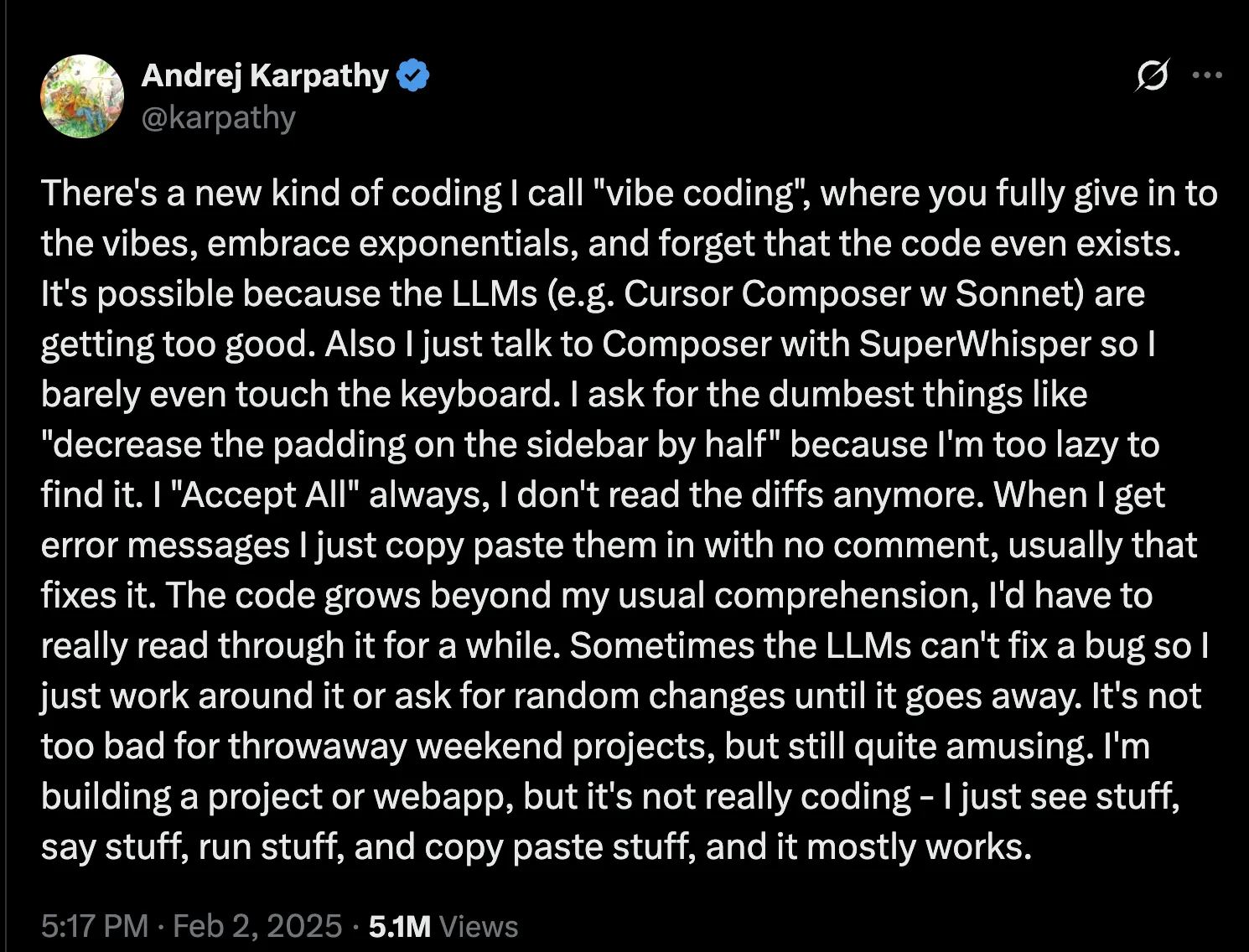
Vibe Scholarship
| Qualities | Coding | Scholarship |
|---|---|---|
| Traditional | Waterfall | Individualized |
| Collaborative | Agile | Interdisciplinary |
| AI-assisted | Vibe? | Vibe? |
This Week's Readings: Moretti and Snow
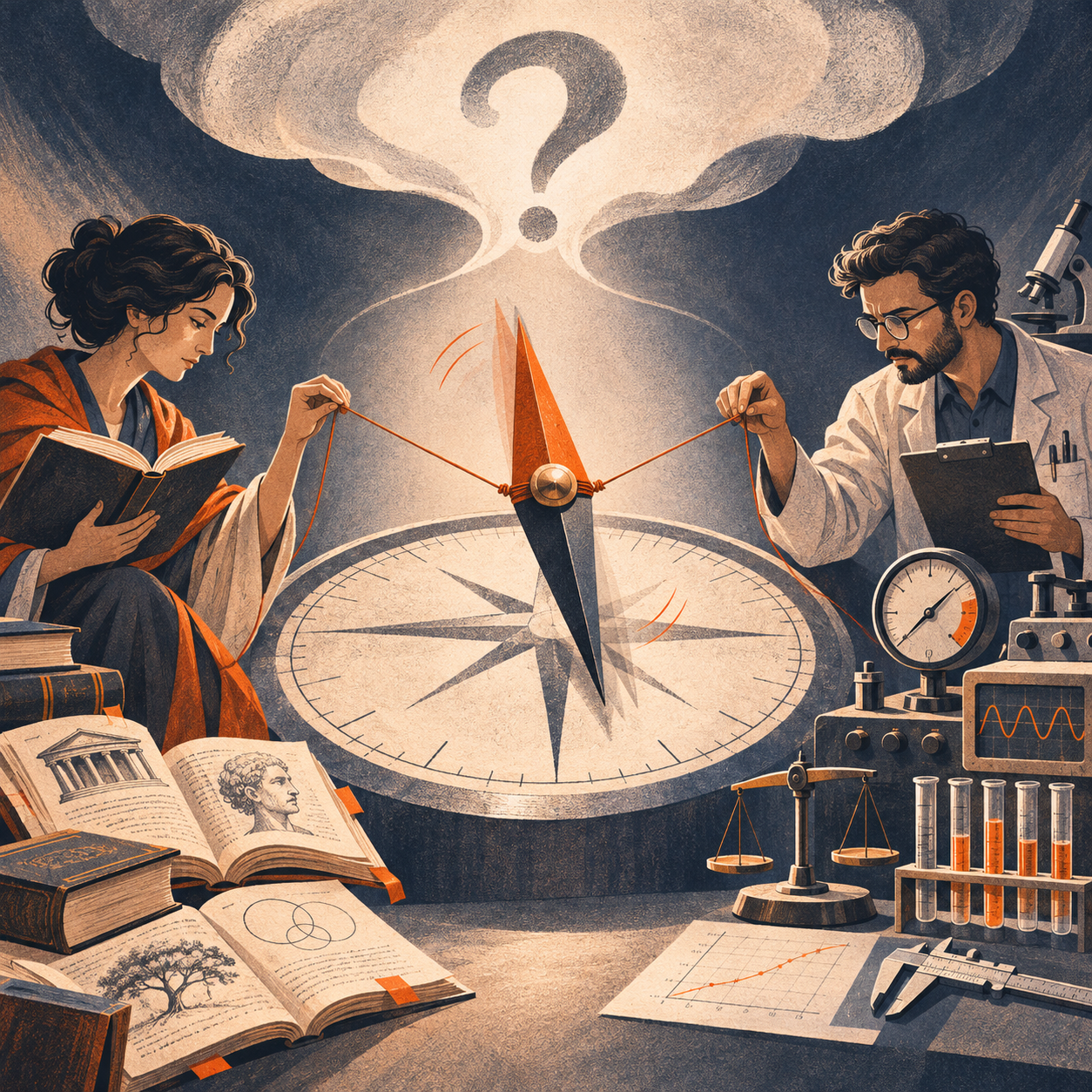
- Moretti (2000): "distant reading" - studying literature through patterns across many texts, not close reading of a few
- What does an AI model do when it "reads" a field? Is it closer to distant or close reading?
- Snow (1959): the "two cultures" of science and the humanities
- Do scientists and humanists read differently? Does AI read more like one culture than the other?
- Can AI bridge the two cultures, or does it widen the gap?

Initial Orientation to AI on the desktop
- Quick check: what AI do people use?
- Web, Desktop or Console?
- Free, Paid, Open source?
UIUC Links:
- AI Apps | Enterprise GenAI | Office of the Chief Information Officer | Illinois
- Illinois Library guidance
UIUC Options:
- Illinois ChatGPT
- Illinois Chat
- Copilot Chat
- Google NotebookLM / Gemini
- Zoom AI Companion
Commercial Options
- Anthropic: Claude
- OpenAI: ChatGPT
- Google: Gemini
- Meta: Muse
- X: Grok
Lightly recommend trialling Claude / ChatGPT at $20 per month. Not mandatory for this course. But these have strong support for data analysis / literature reviews. Claude is my preference (better at mocking academic criticism).
Analyzing PDFs?
- Take care: articles / books are copyrighted, and may not be allowed to be uploaded to an AI service
- But exemptions - Creative Commons-licensed content, institutional repositories, some publishers
- And open source AI on your own computer - exempt, because not a service, no information is transferred (but not as powerful)
- Protect Your Work - Introduction to Generative AI (University Library)

Confirm setup
- Everyone has access to a web or desktop tool?
Close reading, with and without AI
Consider:
- Snow's different cultures
- Different practices of reading
- Reading with and without AI
Seed articles - The Two Cultures and the Problem of Alignment
Humanities / critical studies: Smart, A., Ahmed, S., Kay, J., Tobin, J., Shrishak, K., & Birhane, A. (2026), “Toward a Theory of Value in AI Alignment,” arXiv:2608.10327 (preprint). https://arxiv.org/abs/2608.10327 (method: annotation of 94 value-alignment papers)
Science (computer science, alignment): Sharma, M., Tong, M., Korbak, T., Duvenaud, D., Askell, A., Bowman, S. R., et al. (2024), “Towards Understanding Sycophancy in Language Models,” ICLR 2024. https://arxiv.org/abs/2310.13548 (main paper about 9 pages; appendices optional)
[Claude asks:]
Both articles are about aligning AI with human values. Sharma et al. treat human preferences as the signal; Smart et al. ask whether preferences can stand in for values. Where do they agree, and what does each culture's method let it see that the other misses?
Side note: arXiv, SocArXiv, EdArXiv
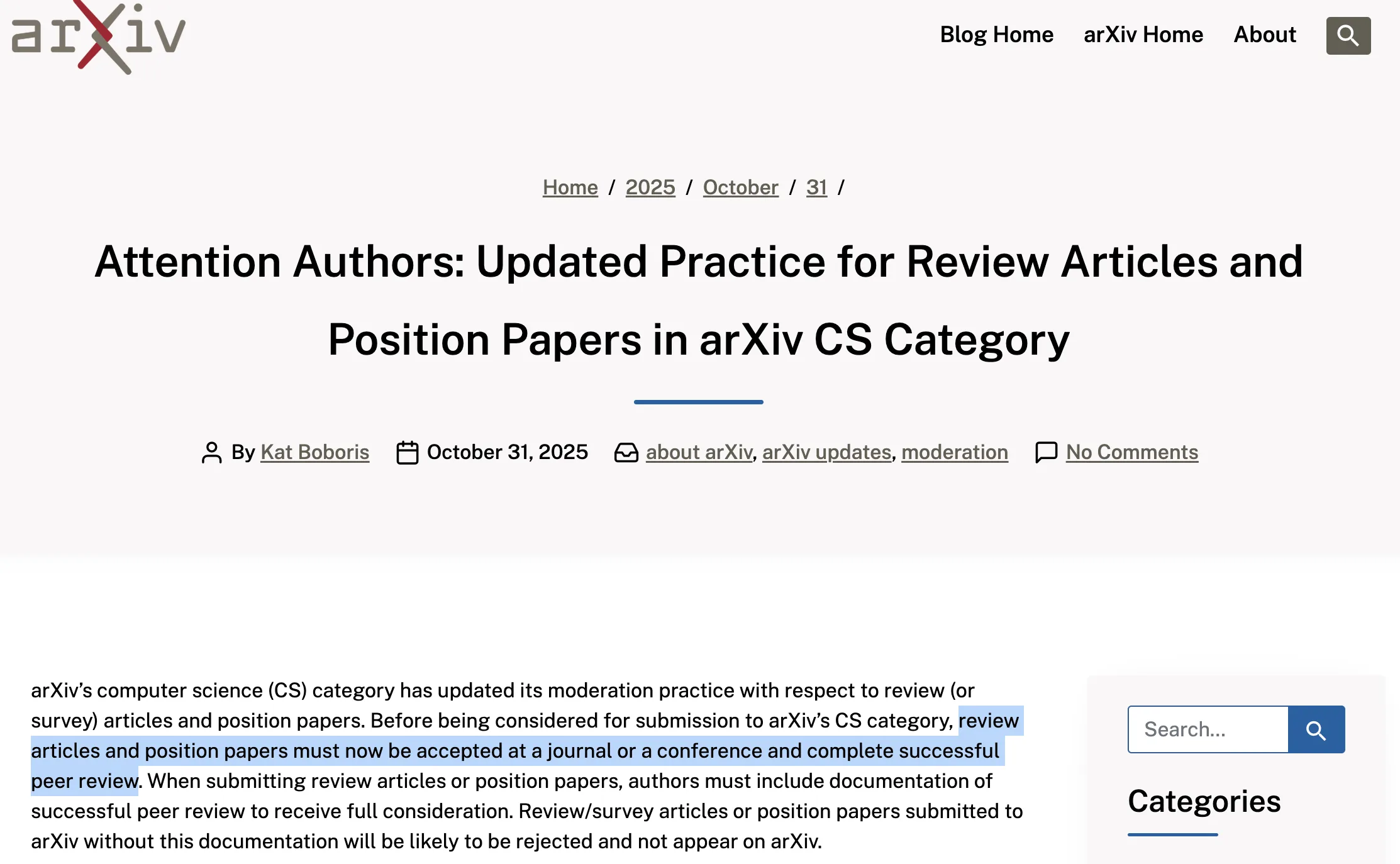
- Pre-print - not yet peer-reviewed
- Archive of scientific literature
- Flooded with AI-generated content...
- Since late 2025, arXiv's computer science section accepts review and position papers only after peer review
'Fast' Reading / 'Vibe' Scholarship: Two groups
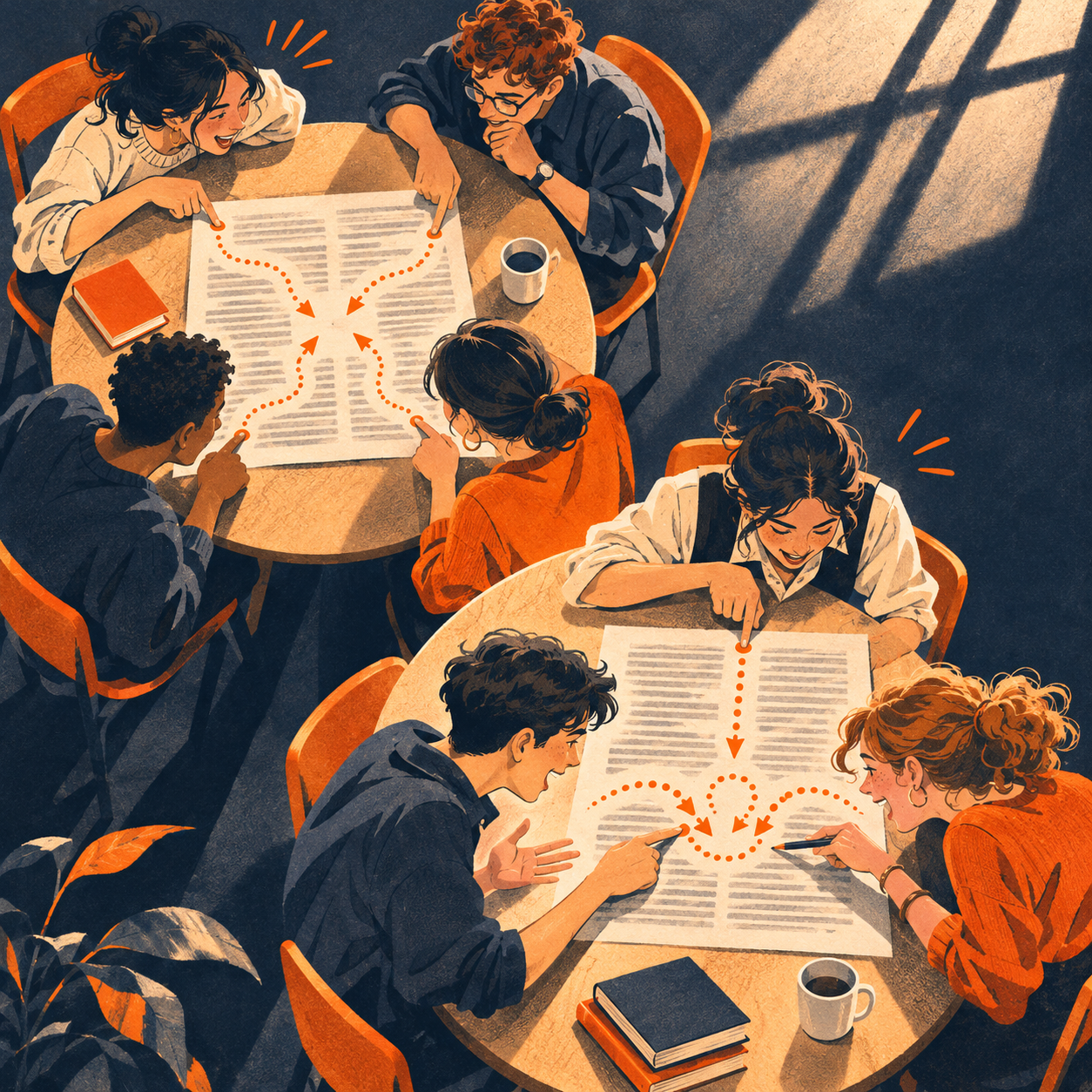
- The Humanities group (Group A) - reads the Humanities paper first
- The Science group (Group B) - reads the Science paper first
- 3 approaches: strategic (outside > in), sequential (top > bottom), methodological (inside > out). 1 or 2 people per approach
- Answer the mock research question: "how should we align AI?"
- And implicit sub-question: are these two articles compatible, contradictory - or talking past each other?
Prompt samples - for people as well as machines!
Strategic prompt: "Work outside in. Start with the abstract, introduction, references, and conclusion. State your provisional interpretation, then identify the specific additional sections that would most seriously test it. Read those sections and revise the interpretation, citing passages. Use references to situate the article."
Sequential prompt: "Work top to bottom. Read the supplied text in its presented order. At each section, record how the central argument develops, which evidence is added, and what remains unresolved. Cite passages. Do not fill in missing sections."
Methodological prompt: "Work inside out. Begin with the methodology. Explain what that section establishes, then trace backward and forward to reconstruct the article’s larger argument. Distinguish what you verified from what you inferred."
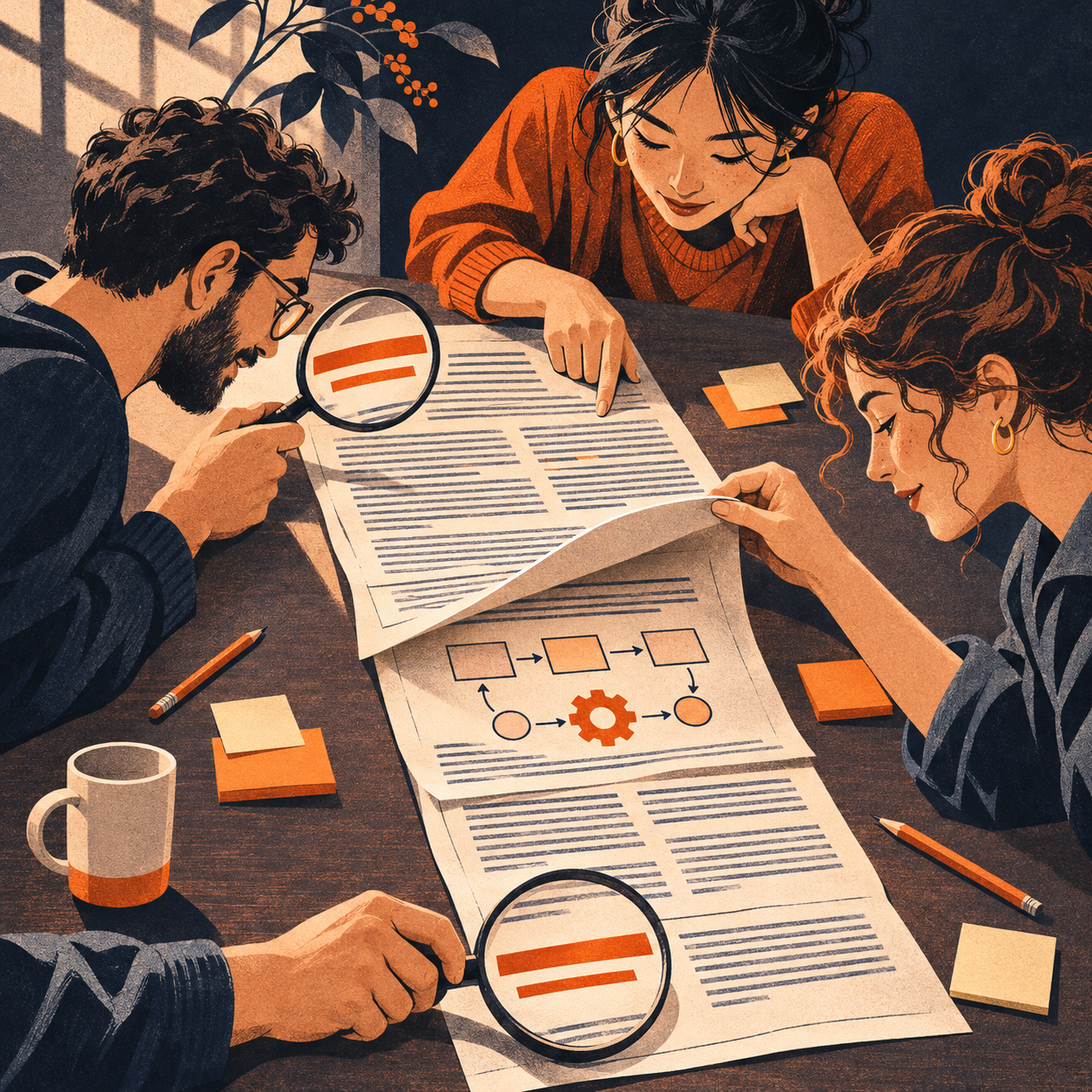
First paper: Speed Group Reading, without AI (15 minutes)
Scan and discuss the first paper according to 3 strategies:
- strategically (what does it really say?) (outside > in)
- sequentially (how is the argument organized?) (top > bottom)
- methodologically (what does it do?) (inside > out)
Make notes:
- what does it really say (strategic)?
- how is the argument organized (sequential)?
- what does it do (methodological)?
Second paper: Speed Augmented Reading (15 minutes)
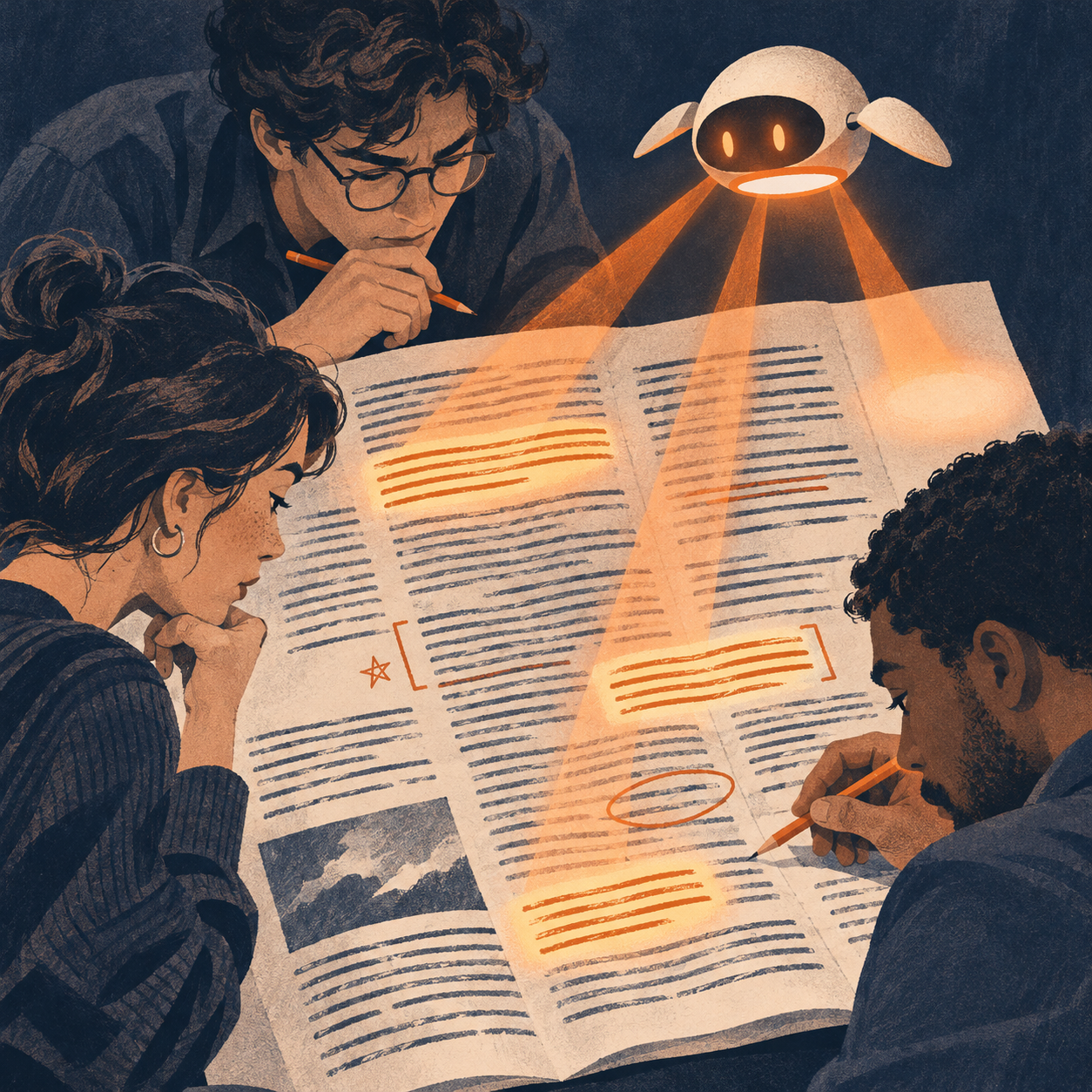
Scan and discuss the second paper with AI, using the prompts:
- strategically (what does it really say?) (outside > in)
- sequentially (how is the argument organized?) (top > bottom)
- methodologically (what does it do?) (inside > out)
Make notes:
- what does it really say (strategic)?
- how is the argument organized (sequential)?
- what does it do (methodological)?
Synthesis (10 minutes)
- Compare and contrast the articles - answer the question
- Answer the mock research question: "how should we align AI?"
- And implicit sub-question: are these two articles compatible, contradictory - or talking past each other?
- Answer the mock research question: "how should we align AI?"
- What reading strategy worked better? What did you prefer?
- To read with AI or without AI? Which AI prompt worked better? (may not be much difference)
- Group vs individual reading?
- Preferences for humanities or science style of writing?
Share and Discuss Results
- Discuss results
- Preferences? science / humanities? reading with / without AI? Reading strategy?
Break!

From the Article (close reading) to the Conversation (distant reading)
Two activities:
- Discover literature
- Map literature

Strategies for literature discovery
Traditional:
- Keyword search (find the keywords in the respective articles; search Google Scholar, library databases)
- Author search (have these authors written collectively or individually on this topic?)
- What does this article reference? (mine the articles' references)
- What has referenced this article? (find what has cited these articles in Google Scholar)
- Journal / issue navigation (what else is published in this venue? and what are other journals commonly cited by this article?)
- Other?
Augmented:
- AI as exploration / discovery: make up queries:
- "Anthropic researchers authored this article. What research have other companies published on alignment?"
- "Birhane has published a lot on critical AI. Has she written elsewhere on alignment?"
- Connect to your own expertise: "I've been reading about how organizational leadership is responding to AI. Have there been studies of how leadership addresses alignment?"
New Breakout Rooms
- Collectively build a small database (10-20 articles) of literature using "traditional" techniques - but tag each article with one of the approaches (keyword, author, references, cited by, journal, other). Use your group's rows in the literature database.
- Separately build a small database via AI querying (Found via: AI)
Then test:
- Did the databases overlap?
- What are the strengths / weaknesses of each approach?
- What is the right balance of traditional / AI approaches?
Strategies for literature mapping
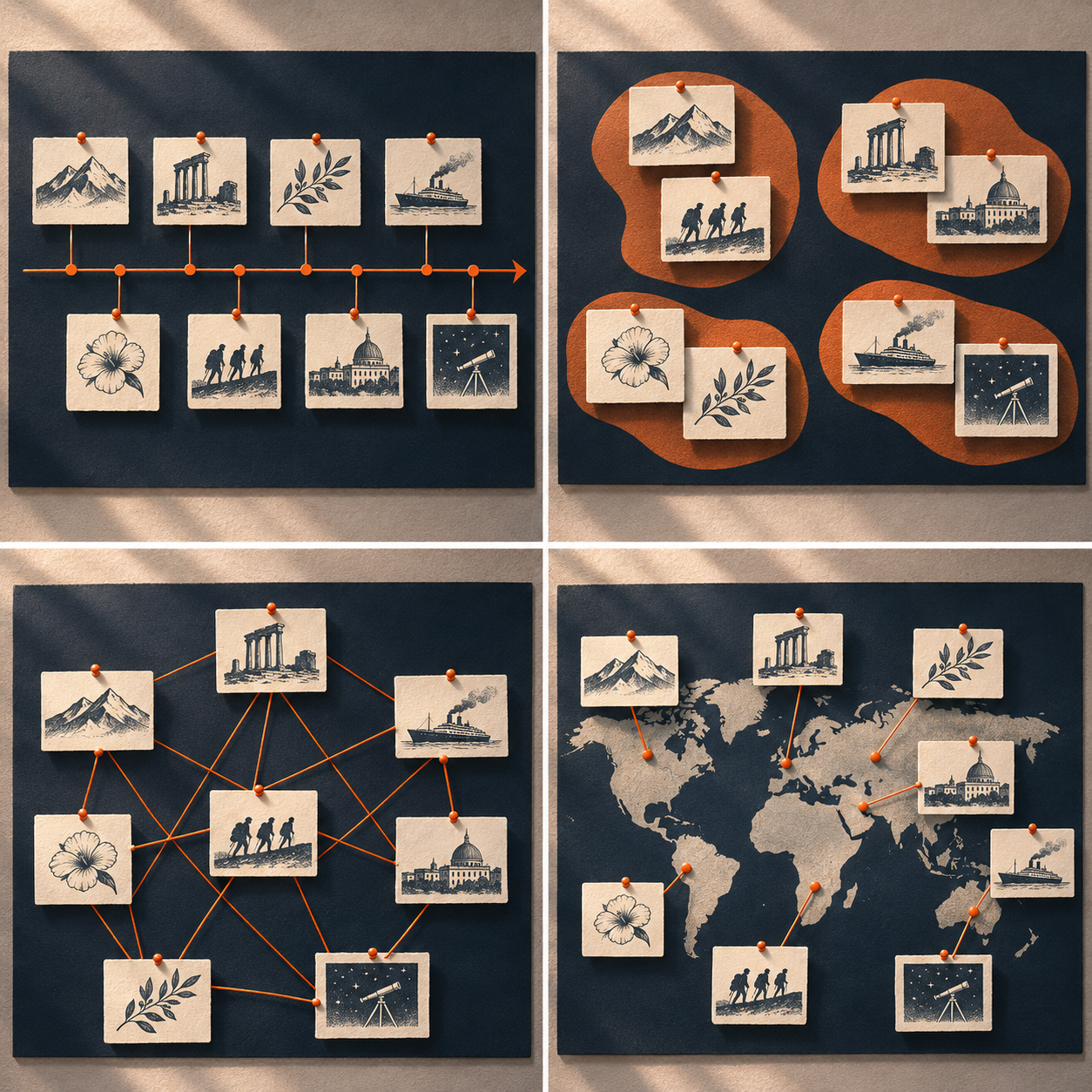
Consider the organizational approaches we discussed last week:
- Chronological (this literature follows from this other literature)
- Thematic / conceptual (this literature discusses this theme; this other literature discusses this other theme - and this is where they overlap / differ)
- Relational (this literature relates / responds to this other literature)
- Spatial (this literature studies phenomenon X in the US; this literature studies phenomenon X in South Africa)
Can we start to make sense of our emergent database via one or more of these approaches?
New Breakout Rooms
- In the same database, use one or more of the mapping strategies to apply codes (Mapping principle, Our code)
- For example, choose "Chronological" and add "early 20th century", "1980s", "2020s"
- Or "Thematic", and add "philosophies of alignment", "human values"
- Or "Relational", and add "cites Sharma et al."
- Or "Spatial", and add "examines differing approaches between East Asian and American companies to AI alignment"
- Ask AI to do the same, and record its codes alongside yours (this could even be Gemini in Google Sheets, if that is enabled)
Generate and visualize the mapping
Ask AI to generate:
- A visualization of the mapping
- A mock literature review structure
- A mock statement of the gap in the literature
Sample prompt:
"From this coded database, generate a rich visual map of the key chronological, thematic and relational connections between these works."

Aside: using text as interim format for images
Why? More plastic / fluid representation
Example: Mermaid is a plain text format - so very easy to iterate with using AI - "contract it", "expand it", "simplify it" etc.
ChatGPT: generates Mermaid diagrams
Also works for other formats, e.g. SVG (Scalable Vector Graphics). Allow you to evolve & iterate a representation
General discussion
- Share the visualizations, mock structure and gap in the literature
- Reflect: what are the affordances of AI for literature discovery and mapping? Where does it fit - or "align" - with traditional approaches? What are the risks?
- Vibe scholarship: did AI deepen reading and scholarship, or just accelerate production?
Start an AI-Use Record
- Task 6 asks you to explain where AI influenced your searching, reading, mapping or writing; what you checked; what you rejected; and what responsibility you retained
- Start keeping notes now: which tool, what you asked, what you checked, what you kept and what you rejected
- You don't need to publish private conversations - selected examples are enough
This Week's Activity: Task 3 · Conceptual map of the literature (10%)
- Develop a small database (if you don't have one)
- Create one or more conceptual maps (visual or verbal), using AI of your choice
- Analyze for missing perspectives / views
- Identify one or more potential gaps
- Compare these gaps with your research topic or question. Do they align? Does your topic need narrowing?
Due Monday 9 November, 11:59 PM Central
Next Week's Readings
Spivak, G. C. (1988). Can the subaltern speak? In C. Nelson & L. Grossberg (Eds.), Marxism and the interpretation of culture (pp. 271–313). University of Illinois Press. University Library: print, Communications Library
Bring a writing sample for next week's peer workshop