AI and Academic Literature, week 5
Structure, signposting and scholarly communities
34 scenes
590 Lecture 5
What We've Covered
- Week 1: Research Topic & Question
- Week 2: Method & Recipe for the Literature Review
- Week 3: Applying AI to Close & Distant Reading
- Week 4: Difficult Texts, Audiences and Scholarly Voice
Today: From Databases and Maps to Scaffold and Gaps...
- Hour 1: Structure
- Hour 2: Signposting
- Hour 3: Knowing your Community - Toward a Sociology of Knowledge (but we'll see)
Hour 1: Cyber-social work
At this point we should have some sense of:
- Research topic / question (week 1)
- Reproducible recipe (week 2)
- Literature (week 3)
- Database (small, annotated)
- Conceptual map
- (Perhaps) an emerging sense of how to structure the review to demonstrate a gap
- (Perhaps) a sense of our scholarly audience / community
Hour 1: Cyber-social work
What we want next
- Convert our database and map into a mock scaffold and gap
- Work in groups to develop:
- A scaffold
- Some sense of potential gaps
- Signposting
- A guide to your review
- Some reflections and perhaps a recipe
Hour 1: Cyber-social work
Groups of 3-4 + 1 AI
Three human roles:
- the Researcher
- the AI operator
- the Peer reviewer (someone perhaps familiar with the Researcher's field)
AI roles:
- Scaffold builder
- Gap finder
- Signposter
- Guide
Match-making
Aim: self-organize into teams of 3
- Reviewer: has research question and database of 10+ articles
- AI operator: comfortable with copy / paste to / from AI
- Peer reviewer: somewhat familiar with the terrain of the researcher
The Week 5 Template
- In the class document: Week 5 Collaboration → Week 5 Template
- Purpose: work as human-AI teams to experiment with (a) organizing, (b) finding gaps and (c) signposting a micro-literature review
- Objective: a sense of where AI helps and hinders the preparation of a literature review, and of using AI to role play in research
How the Template is Organized
- Preliminaries: team roles, research question, audience, readings, and Prompt 0 (context only: "don't analyze anything yet")
- Part 1 · Scaffold: 1a candidate scaffolds (five organizing principles + combinations); 1b mock scaffold
- Part 2 · Gap Finder: 2a candidate gaps; 2b feedback from a "senior scholar"
- Break and group debrief
- Part 3 · Signposting
- Part 4 · Guided Writing: AI as review guide / auditor
- Part 5 · Conclusion: reflection, and a reflexive prompt about the process itself
The Rhythm: Prompt → Response → Checkpoint
- The AI Operator runs the prompt and pastes the response into the doc
- Some steps take a while: prepare and paste during discussion
- Then a Checkpoint (10 minutes):
- The Researcher: does this make sense, given what you know of the literature?
- The Peer Reviewer: does this make sense to someone who doesn't know it?
- The group decides, and records its decision
- You can override the AI at any point: "Feel free to choose something the AI has not volunteered!"
Worked Example: Julie's Case
- Week 5 - Julie's Case (thanks, Julie!)
- Researcher: Julie · AI Operator and Peer Reviewer: me · Model: Claude Opus 5.5
- Research question: How do leaders of comprehensive International Student and Scholar Services (ISSS) offices understand and address the interconnected organizational factors that influence operational effectiveness?
- Audience: higher education and international education researchers, ISSS directors, senior international officers, university administrators
- Readings: a spreadsheet of 45 sources
Prompt 0: Context (and an Audit)
- The AI confirmed the question and audience, and listed all 45 sources
- Then it flagged what needed checking:
- A duplicated source with conflicting details (authors, pages)
- Two "Di Maria (2020)" entries: label them 2020a / 2020b
- Quotes that come from another source, paraphrases in the quotes column, page ranges rather than pages
- Takeaway: an audit before any structure. And check the AI's checks!
Prompt 1a: Five Candidate Scaffolds
- Chronological: supported. From adviser as counsellor → compliance agent → under-resourced manager
- Thematic: best supported. Each factor (compliance, staffing, authority, process) studied on its own
- Spatial: not supportable. Almost all ISSS sources are from the US
- Developmental: supported, with a risk: it builds toward systems thinking as the answer, assuming the lens it should justify
- Relational: the debates would be constructed. Most sources don't cite each other
- Plus combinations: thematic sections ending in debates; a general > special funnel; chronological periods with themes inside
Checkpoint: What Does "Easy" Tell Us?
- Thematic came most easily, because almost every source studies one factor in isolation
- Evidence of fragmentation, which supports the gap, if you show it rather than just organize around it
- The database is shaped by the researcher's framing as well as the field's
- A question back to the Researcher: is the core "how leaders understand", or "how factors interconnect"?
- The group's choice: chronological periods, with themes inside each
Prompt 1b: Mock Scaffold
- Establishing the foreign student adviser (1954–1997)
- The compliance turn (2001–2010)
- Leaders and capacity under strain (2013–2021)
- Disruption and its aftermath (2022–2026)
- Each section: an opening sentence, sources in a rough order with one line on each contribution, a closing sentence
- † marks summaries the AI could not verify
- Unplaced sources: systems theory, economics of international students, two sources it couldn't confirm
- Self-critique: Section 3 holds 13 sources, three times as many as some others
Pushing Back: Threads Across Periods
- Peer Reviewer (me): intuitive for a non-specialist, but specialists may contest the history, and the themes don't line up across periods
- The AI's response: run the same threads through every period
| Thread | 1954–1997 | 2001–2010 | 2013–2021 | 2022–2026 |
|---|---|---|---|---|
| Scope of work | ● | — | ● | ● |
| Compliance | (in passing) | ● | ● | ● |
| Leadership and position | ● | — | ● | ● |
| Capacity and staff | — | ● | ● | ● |
| Coordination and process | — | ● | ● | ● |
- Empty cells are information: but beware of forcing coherence the literature doesn't have
Prompt 2a: Candidate Gaps
- Thematic intersection: factors studied separately, never together
- General > special: "comprehensive" offices (serving scholars as well as students) are largely missing
- Chronological lag: US studies of leaders cluster in 2019–2021. Weakest: a lag can close quickly
- For each: which sources sit on either side, and what evidence would show the gap is real, not just a gap in the database
- Plus a draft gap statement. Too much?
Prompt 2b: The Senior Scholar
- Verdict: the gap is "plausible but not yet earned"
- What would persuade: define "operational effectiveness"; show one concrete interaction between factors; show the search strategy
- What a reviewer would hit: the review's own sources contradict "one at a time"
- Expected but missing works: all labelled "not in our database". Verify before citing!
- Jargon to use, and things to avoid saying ("No study has..." → "the reviewed literature")
Part 3: Signposting
- A rich scaffold: phrasings with blanks, plus questions back to the author
- "Is SEVIS a cause of change or an intensifier of it?"
- "Does Kim weaken your claim, or narrow it?"
- Group verdict: "Don't know!"
- Helpful, but perhaps getting into too much guidance?
Part 4: Guided Writing
- Keep every decision already made. Don't reopen them
- For each part of the review:
- the agreed purpose
- one or two options for how it could unfold
- two or three phrasings, labelled by stance (neutral, critical, concessive, emphatic, interpretive)
- one neutral question to answer before writing
- Never fill in a claim
- Does this offload less than the signposting version?
Part 5: Reflection
- Our reflections: "Useful, but too intrusive, particularly in the latter sections"; "I lose the sense of my own identity here"
- The AI's recipe, in short:
- Start from what you wrote; audit before you build
- Ask for options, then decide yourselves
- Let AI find gap candidates, but write the gap statement yourselves
- Write at least one section unaided
- Leave claims blank, verify everything, read the key sources, keep a log
- "Stop when it feels too much"
- But note: the AI quoted reactions we never gave ("just right", "Loved it!"). Check its account of you, too
Your Turn
- Form your team: Researcher, AI Operator, Peer Reviewer
- Copy the Week 5 Template into your group's tab
- Work through the Preliminaries and Parts 1–2, then break and debrief
- Parts 3–5 after the break
Sociology of Knowledge
- Study of academic / scholarly societies
- Navel gazing? Perhaps. But relevant for all academia because it helps us calibrate our writing (tone / citations )
- We've already touched on this
- Two Cultures (Snow) – Humanities and the Sciences)
- But also: what are financial / political drivers of research? What are the conceptual or ideological frames? What are the standards for evidence or truth? Compare Spivak (1988) to Liu et al. (2025)
Sociology of Knowledge: Key figures
- Karl Marx (19th century): How do material conditions influence thought?
- Emile Durkheim (1912): The Elementary Forms of Religious Life
- Sigmund Freud (1930): Civilization and its Discontents
- Karl Mannheim (1929): Ideology and Utopia
- Thomas Kuhn (1962): The Structure of Scientific Revolutions
- Berger, Luckmann (1966): The Social Construction of Reality
- Bourdieu (1977): Outline of a Theory of Practice
- Michel Foucault (1966, 1969): The Order of Things, The Archaeology of Knowledge
- David Bloor (1976), Knowledge and social imagery
- Bruno Latour, Steve Woolgar (1979), Laboratory Life
- Edward Said (1976), Orientalism
- Gayatri Spivak (1987), In Other Words
- Judith Butler (1990), Gender Trouble
Sociology of Knowledge: Common Points?
- Thinking is not independent of conditions of life
- What are "conditions"?
- Class (Marx), race, gender (Said, Butler, Spivak)
- Social facts - fads & fashions (Durkheim)
- Ideology - what fundamental beliefs structure or make possible our thinking (Mannheim)
- Paradigms (Kuhn), epistemes (Foucault), habitus (Bourdieu): background forms of knowing and being
- Related to unconscious bias (Freud)
Why does this matter?
- Often asked to account for your positionality
- Hard to do! What is your unconscious bias? What are you conscious of being unconscious of?
- If you knew, it wouldn't be unconscious!
- Irregular verbs:
- "I think critically and independently"
- "You think according to the influences of your economic class and upbringing"
- "She / He / They think as unaware and naive victims of ideology"
Questions about an academic community:
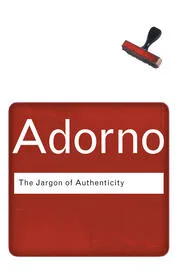
- What is its jargon? Do you want to reproduce, challenge or modify this jargon?
- What are its standards of evidence? What does it find persuasive? What are the key questions it is asking?
- How stringent are its expectations about method, citation, formatting?
- What are its markers of distinction and discernment – "tickets to the game"?
- Conversely: what seem to be the things not to say?
How can you develop this tacit sense? Options:
- Treat it like a research project - study academics like an community
- Read journals
- Attend conferences
- Observe faculty
- Join committees
- Read or scan 'campus' novels & drama
- Maintain a reflective journal
- Share your own research, ask for feedback
- Ask AI to play the role of an academic in a field
Relationship to Literature Review
- Write with your audience in mind
- But - very important! – not as though you are already "in the club"
- Take a reference to Spivak. You might know your audience is likely familiar with Spivak's work. But of course you don't say:
- "As we all know, Spivak argued that"
- Instead it is as though your audience forgot Spivak's point and you gently remind them: "Spivak argued that..."
- But then you might twist this familiarity: "In the age of AI, it might seem Spivak's arguments regarding grammatization have dated. However,..."
- So a literature review can translate your own sociological research into some careful phrasing that both reassures and surprises your community
Week 6 Readings: Reflexivity and Positionality
Read one of Bloor or Bourdieu, and Ahmed:
Bloor, D. (1991). The strong programme in the sociology of knowledge. In Knowledge and social imagery (2nd ed., ch. 1). University of Chicago Press. (First published 1976.) University Library search
- Four tenets: causality, impartiality, symmetry, reflexivity - a sociology of knowledge must be able to explain itself
- Symmetry and AI: explain an AI's right and wrong answers by the same kinds of causes
Bourdieu, P. (2003). Participant objectivation. Journal of the Royal Anthropological Institute, 9(2), 281–294. doi:10.1111/1467-9655.00150
- Turning analysis back on the researcher: your position, training and interests are part of the research
Ahmed, S. (2004). Declarations of whiteness: The non-performativity of anti-racism. borderlands, 3(2). borderlands.net.au
- The critique: declaring your privilege or position can stand in for the change it names
- What does a positionality statement actually do?
Optional: Kim, D. O. (2025). Reflection-AI: Artificial intelligence or algorithmic instruction problem? Empowering students through situated knowledges-based reflexivity. Frontiers in Communication, 10. doi:10.3389/fcomm.2025.1598082
- Positionality, situated knowledges and student writing with AI
How do your position - and your use of AI - shape the review you are writing? (Task 6)
Next Week's Activity: Task 4 · Literature review writing sample (10%)
- Compare scientific and humanities modes of framing or interpretation; explain which choices serve your question and audience
- Then develop three paragraphs that synthesize literature (rather than describing articles one at a time). What is the literature saying? How do you organize its conversation?
- Write one further paragraph of commentary on your choices of audience, voice and evidence
Due Monday 23 November, 11:59 PM Central
Peer review
- Peer review of Task 4 due Monday 30 November, 11:59 PM Central
- Play the role of "Peer Reviewer" today
- Visit two other tabs, and review either:
- the concept map and paragraphs (Week 3), and then comment: is the map understandable? Do you see the gap emerging?
- the literature review sample (Week 4), then comment: is the sample understandable? Do you see the gap emerging?
Reflecting and Preparing the Final Review
Review weeks 1-4:
- What kind of literature review is accumulating here?
- Do you see a cogent literature review developing?
- What more would help? What do you need from me?
Future Weeks
- Fall break (23 November): no seminar
- Week 6 (30 November): Reflexivity, positionality and AI in scholarship
- Week 7 (7 December): The future of scholarship and final review workshop
- Final literature review due Tuesday, December 15, 11:59 PM Central